



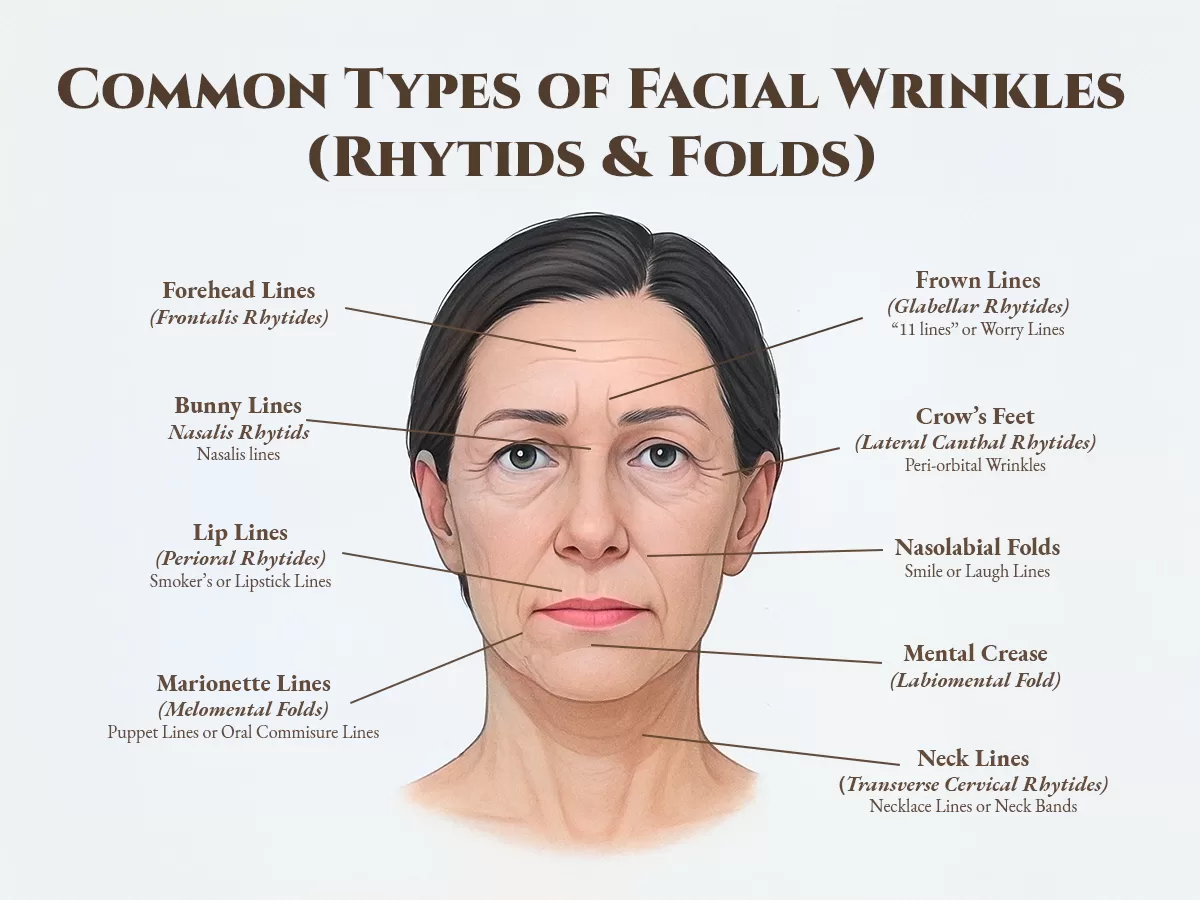
The Most Common Types of Facial Wrinkles
Facial wrinkles, also called rhytids in the medical community (sometimes written as rhytides), are a natural part of growing older. As you age, proteins that keep skin firm such as collagen and elastin decline, and natural oils decrease. Years of UV radiation and free radical damage further weaken skin structure. Together, these changes lead to the visible lines we call wrinkles.
Because the skin on the face and neck is thinner, these areas are usually the first to show signs of aging. Genetics, sun exposure, smoking, pollution, poor diet, and lack of hydration can all accelerate the process.
It’s important to note that not all lines on the face are the same:
- Rhytids are true wrinkles—creases in the skin caused by muscle movement and the breakdown of collagen and elastin. They can be dynamic (visible only with movement, like frown lines) or static (visible even at rest, like deep crow’s feet).
- Folds are deeper structural creases, such as nasolabial folds or marionette lines. These occur when facial fat, ligaments, and bone structure shift with age, causing skin to drape into defined creases.
While fully preventing rhytids and folds isn’t possible, their appearance can be reduced. Daily sun protection (SPF 30+ and protective clothing), a nutrient-rich diet, regular exercise, and medical-grade skincare with peptides, hyaluronic acid, and stem-cell based ingredients help maintain skin quality.
In-office procedures provide additional support. Injectables such as neuromodulators (Botox, Dysport) smooth dynamic rhytids, while dermal fillers (Juvederm, Restylane) restore volume to folds. Resurfacing options like chemical peels, the DiamondGlow facial, and collagen-stimulating treatments such as SkinPen microneedling improve skin tone, texture, and fine lines.
Wrinkles and folds are inevitable, but understanding the difference—and identifying which type you have—is the first step toward choosing the right treatment. Below are the most common types of facial rhytids and folds and what causes them.
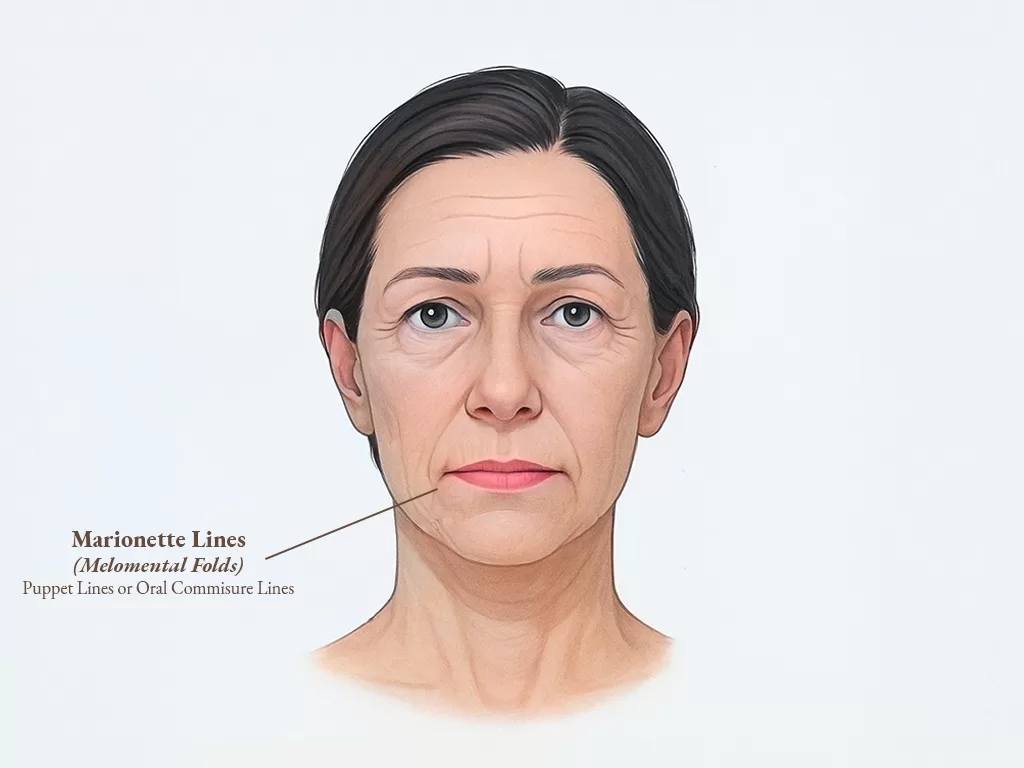
Marionette Lines
What are they?
Marionette lines are C-shaped, vertical lines that frame the chin. They run from the corners of the mouth to the jawline, resembling the puppet lines on a ventriloquist’s doll.
What causes them?
They result from a loss of midface volume and overactivity of frown-related muscles. As collagen and elastin decline, the cheeks sag, pulling the mouth corners downward and forming static wrinkles.
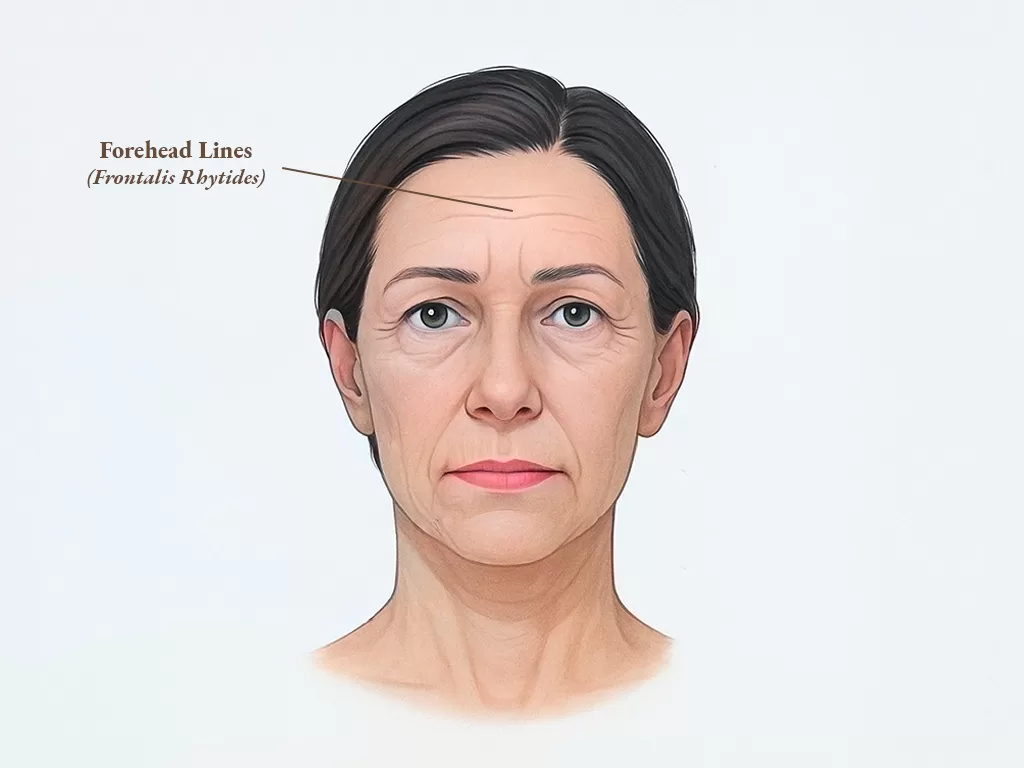
Forehead Lines
What are they?
Horizontal brow wrinkles that stretch across your forehead. Often several run in parallel above the eyebrows. These can be dynamic or static.
What causes them?
They come from raising the eyebrows, which engages the frontalis muscle. Dehydrated skin makes forehead wrinkles appear more pronounced.
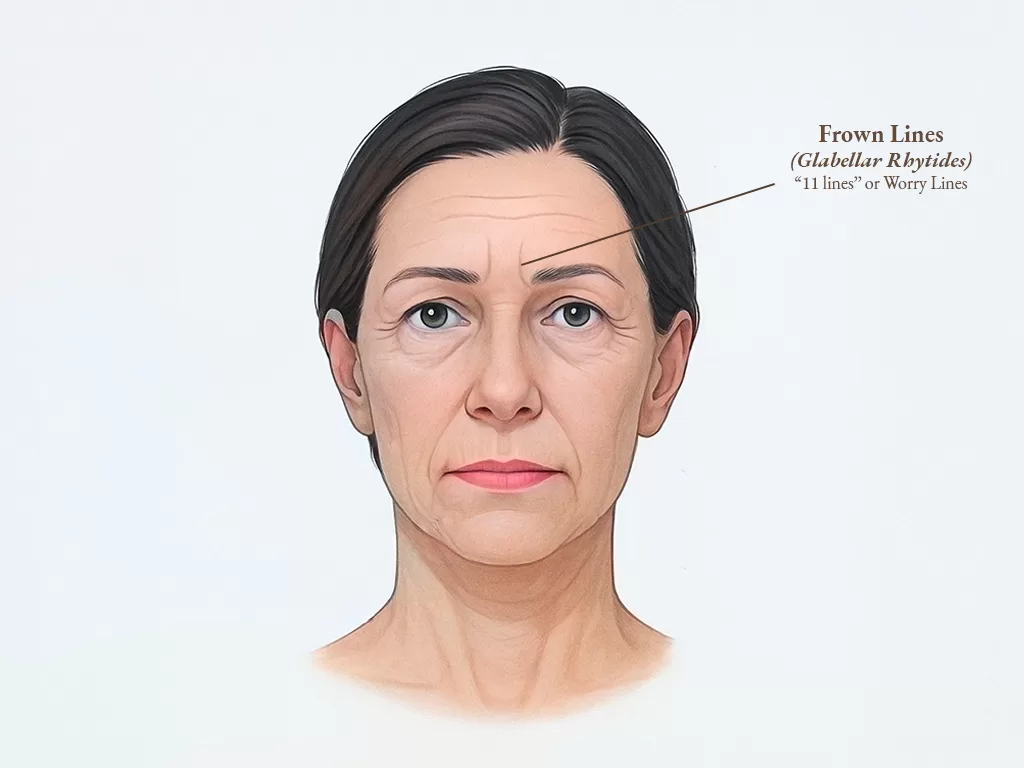
Frown Lines (Glabellar Lines)
What are they?
Vertical lines between the eyebrows, also called “11 lines” or worry lines. Despite the name, they aren’t limited to frowning—they can show even when smiling.
What causes them?
Repeated furrowing, squinting, or concentrating activates the glabella region, which is made up of five muscles. Their job is to pull the brows downward, but over time they create deep facial lines.
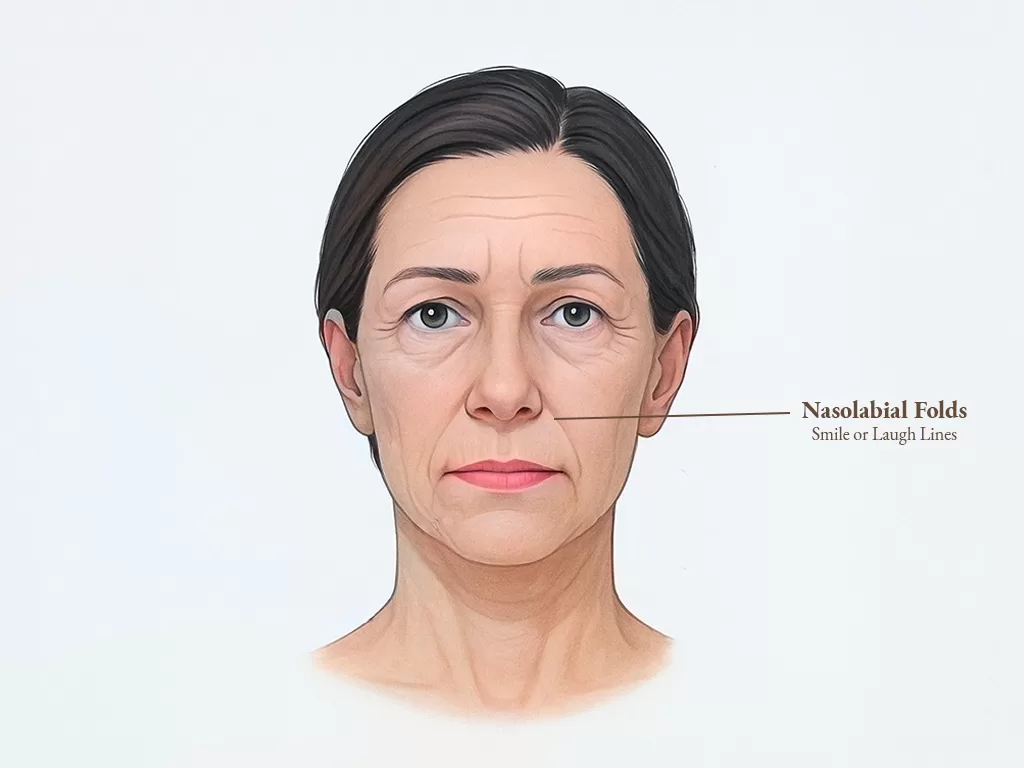
Nasolabial Folds (Smile or Laugh Lines)
What are they?
These folds, also called smile lines, run from the sides of the nose to the corners of the mouth.
What causes them?
They deepen with repetitive smiling but are also tied to structural changes in the cheeks. As collagen and elastin break down, the folds look more dramatic.
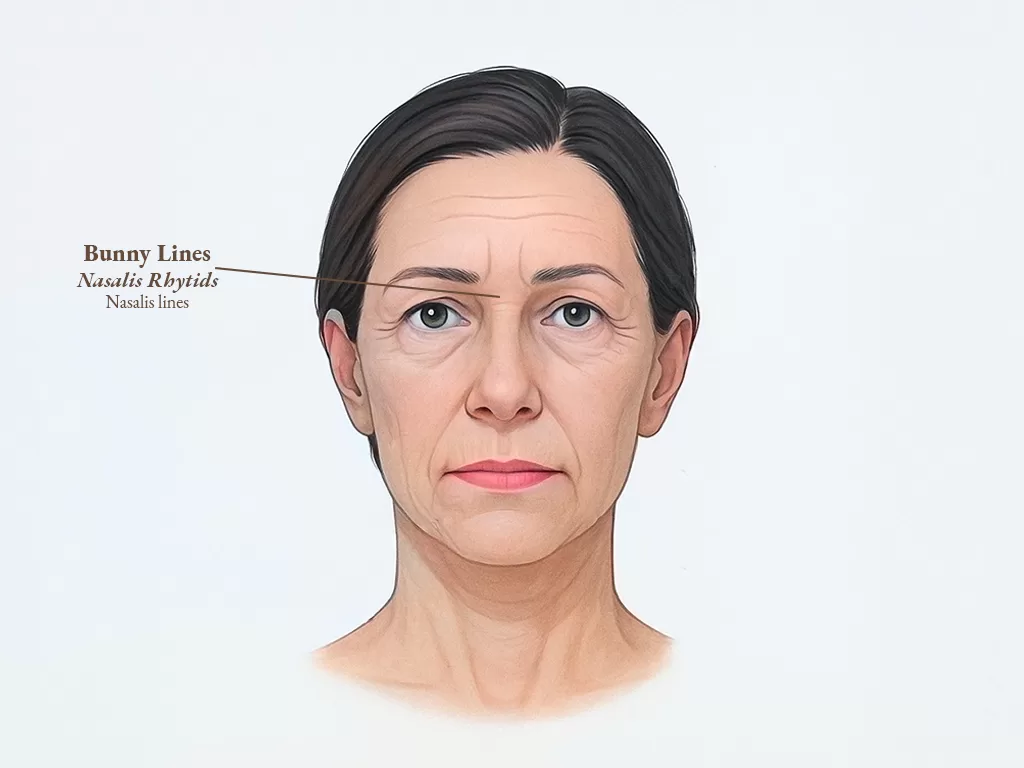
Bunny Lines
What are they?
Diagonal or vertical wrinkles on the sides of the nose. They appear most often when you smile or scrunch your face.
What causes them?
Bunny lines are formed by contraction of the upper nasalis muscle and the levator labii superioris alaeque nasi muscles along the nose.
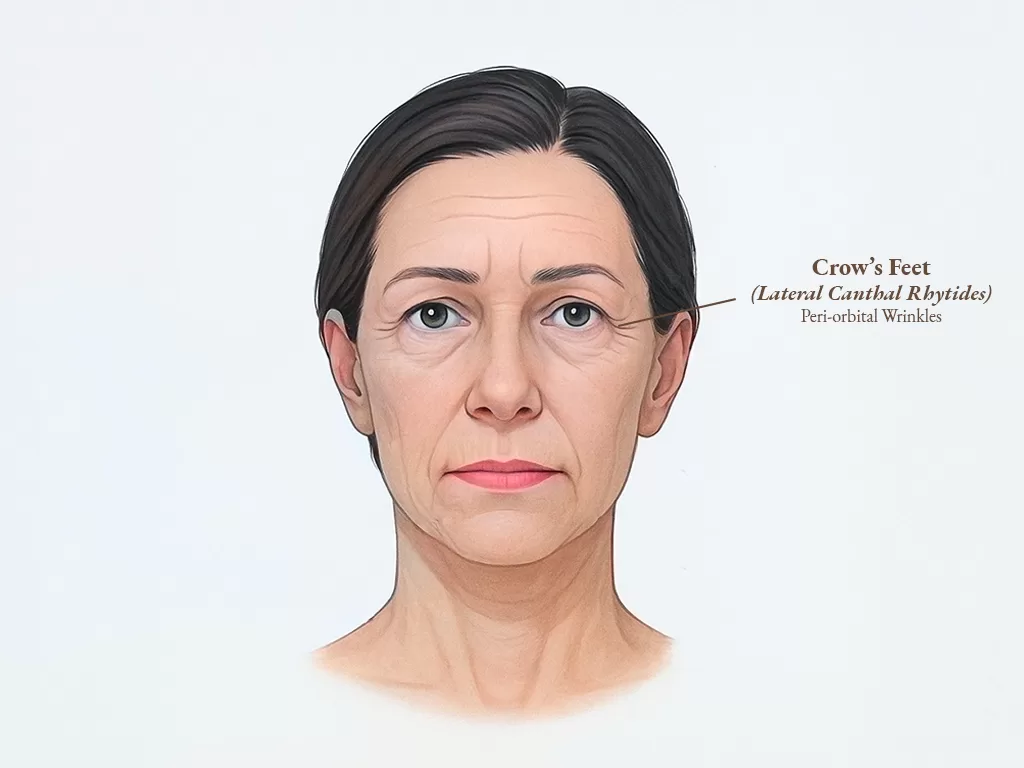
Crow’s Feet
What are they?
Fine horizontal and diagonal wrinkles spreading from the corners of the eyes. Because the skin here is thin, crow’s feet are usually the first facial wrinkles people notice.
What causes them?
Repeated contraction of the orbicularis oculi muscle during smiling, laughing, and squinting. A lifetime of expression makes them deeper.
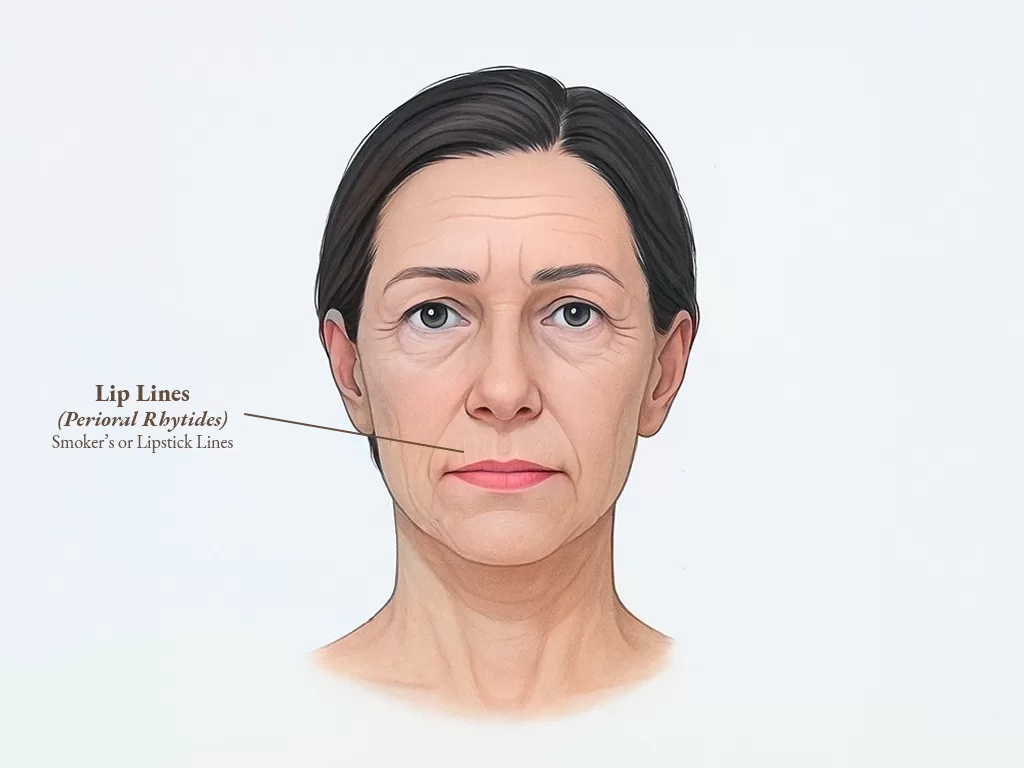
Lip Lines
What are they?
Tiny vertical wrinkles along the upper lip edge and even on the lips. Also called smoker’s lines, lipstick lines, or hatch lines.
What causes them?
The orbicularis oris muscle contracts with speaking, drinking, or puckering. Dehydration and aging worsen the effect. Smoking and frequent straw use also speed their formation.
Mental Crease
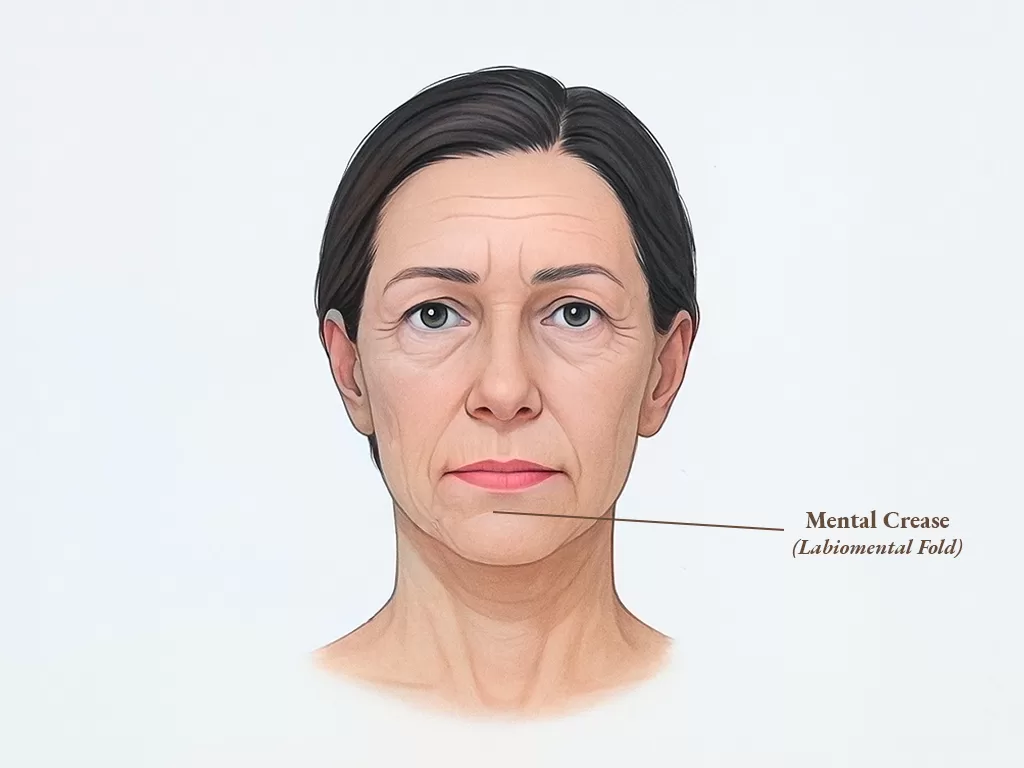
What is this?
A downward-curving horizontal wrinkle between the lower lip and chin.
What causes it?
Contraction of the mentalis muscle during pouting or tension. Over time, the crease deepens and becomes permanent.
Neck Lines
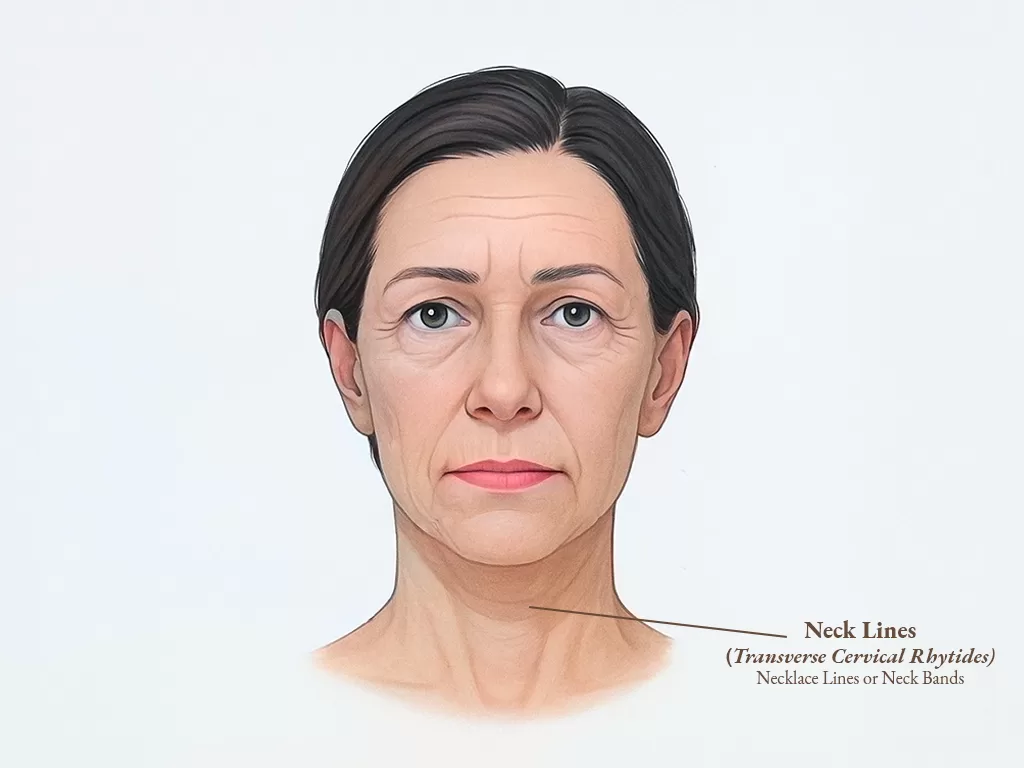
What are they?
Horizontal lines across the neck, sometimes called necklace lines or neck bands. Vertical lines can also develop.
What causes them?
Looking down often contributes to these wrinkles—hence the modern term “tech neck.” Sun exposure without sunscreen also accelerates their appearance.
Key Takeaways
- Wrinkles (rhytides) are a natural part of aging, influenced by collagen loss, sun exposure, and lifestyle.
- Dynamic wrinkles appear with movement; static wrinkles are always visible.
- Common facial wrinkles include forehead lines, frown lines, crow’s feet, smile lines, lip lines, marionette lines, and neck lines.
- Daily sun safety, hydration, and professional skincare help.
- In-office procedures such as Botox, fillers, and resurfacing treatments reduce both fine lines and deep face wrinkles.
Ready to Address Your Wrinkles?
Wrinkles and folds are part of aging, but you don’t have to live with lines that bother you. Whether you’re concerned about frown lines, crow’s feet, or deeper folds, the right treatment plan can make a visible difference.
Book Now to schedule your consultation and explore the best options for your skin.
GET IN TOUCH